The short answer
Traffic lanes darken from oily soil ground into the fibers and flattened pile. Hot-water extraction with a pre-spray usually lifts the soil and raises the pile. Fibers that are crushed or worn away do not recover, so cleaning before lanes set in matters most.
On this page
Why do traffic lanes turn dark?
Shoes carry in fine grit, plus oils from cooking, skin, and pavement. Walking presses that soil into the same narrow path again and again. The oily film holds grit against the fibers, and repeated steps flatten the pile so it reflects light differently. The result is a dark, dull lane between doorways.
Lanes often look worse than the rest of the room because the whole carpet is dirtier than it seems. Cleaned patchily, the lane can look like a stripe.
What can cleaning fix and what can it not?
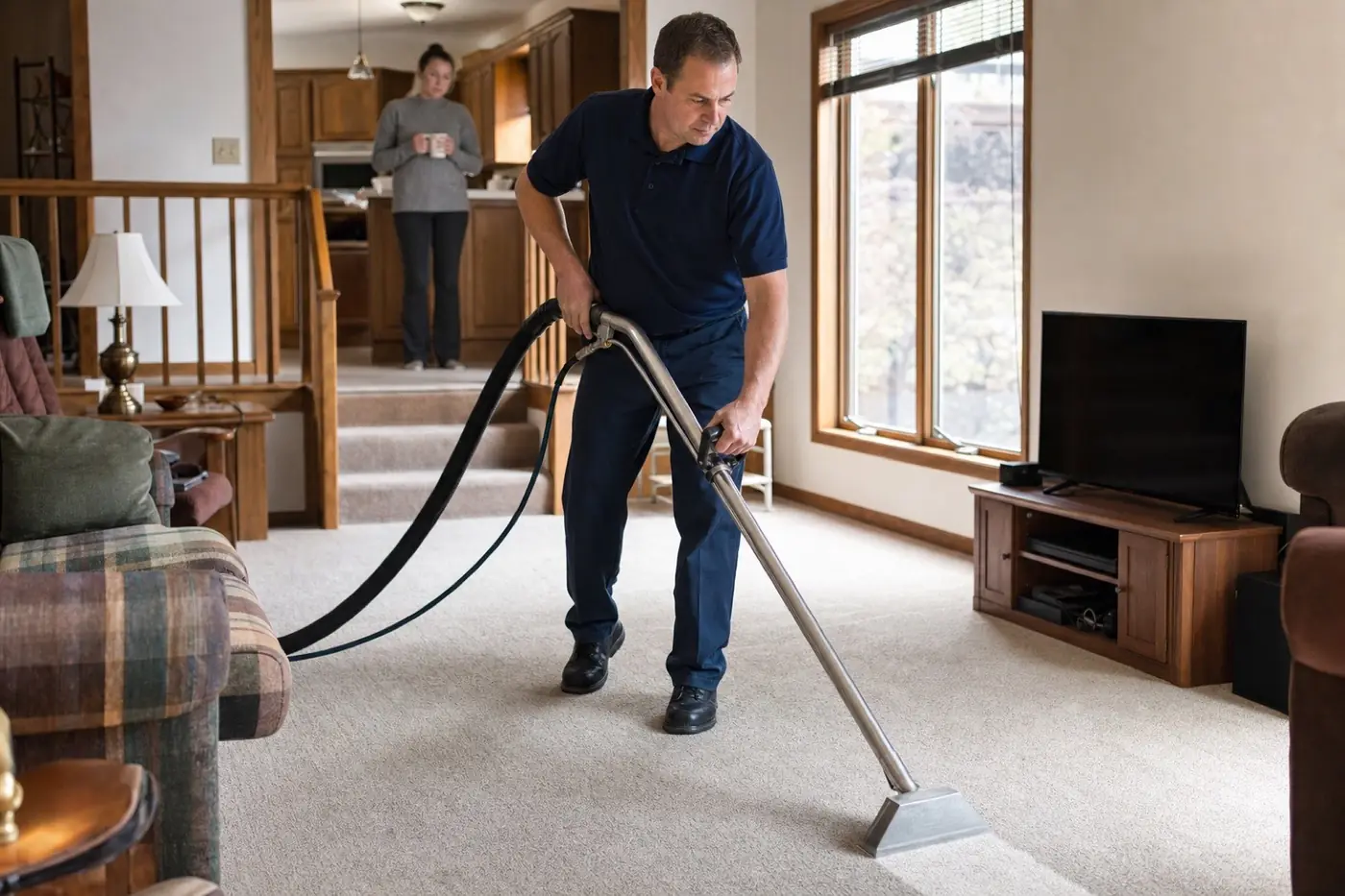
Hot-water extraction with a pre-spray on the lanes usually lifts the oily soil and raises matted pile. Many lanes look much closer to the rest of the carpet afterward.
Some changes are permanent. Fibers that are crushed flat or worn away do not grow back, and a worn lane can still look different once it is clean. No cleaning can promise a result, so ask for an honest read on your carpet before you book.
How often should high-traffic areas be cleaned?
Clean lanes before they set in, not after. Hallways, stairs, and entries usually need attention more often than bedrooms. Homes with pets or kids may want a shorter gap; the guide on carpets with pets or kids covers how to decide. Offices follow the same logic, covered in how often to clean office carpet.
How do you slow traffic-lane wear?
- Put a wide mat inside and outside each entry, and take shoes off at the door.
- Vacuum the lanes often, going over them slowly from several directions.
- Lay a rug or runner in hallways and at doorways.
- Rotate furniture now and then so wear and pile pressure are spread out. For marks left by heavy pieces, see furniture dents.
Want it handled for you? Request a quote and mention which hallways or rooms have dark lanes.