The short answer
Usually, yes, for cement-based grout. Grout is porous and soaks up spills and soil quickly. After a deep clean, let it dry completely, then apply a penetrating sealer to slow staining. Epoxy grout and glazed tile faces do not need sealing, and a water-drop test shows whether older grout needs it.
On this page
Why is cement grout porous?
Cement grout is made from cement and sand, and it dries with tiny pores. Water, soap, oils, and food soil can all seep into those pores. That is why grout lines darken long before the tile around them does.
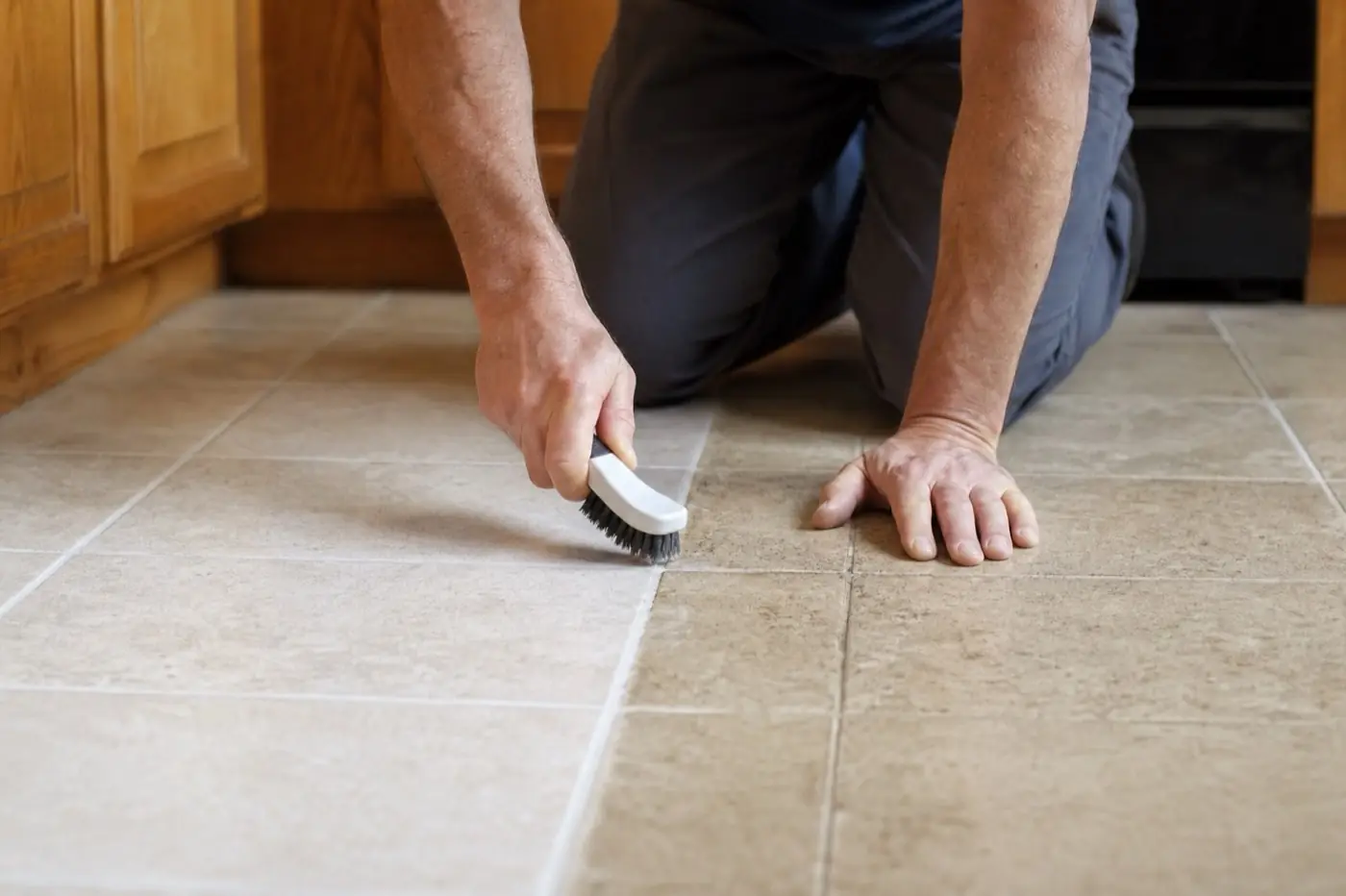
Cleaning lifts what is in the pores, but it does not close them. Without a sealer, the same pores are ready to absorb the next spill. The guide on cleaning dark grout lines covers the cleaning step itself.
When should you seal grout after a deep clean?
Seal after cleaning, and only once the grout is fully dry. Sealer cannot soak in if the pores still hold moisture, and it can trap dirt or dampness underneath. Drying often takes a day or more, depending on the room and the cleaner used.
New grout usually has to cure first, so check the grout maker's directions for the wait before the first seal.
What is the difference between a sealer and grout colorant?
A penetrating sealer soaks into the grout and lines the pores so liquids bead up instead of sinking in. It generally does not change the color.
A grout colorant is a pigmented product that coats the grout to change or even out its color. Some colorants are paired with a sealer, and some need one on top. Read the product directions, because the two jobs are different.
How do you test whether grout needs sealing?
Put a few drops of water on clean, dry grout and watch for a minute or two. If the water beads up, the sealer is still working. If the grout darkens and soaks the water in, it is a good time to reseal after the next deep clean.
Test a few spots, especially near the sink, shower, and entry, where grout takes the most wear.
Which surfaces do not need sealing?
- Epoxy grout, which is not porous in the same way.
- Glazed tile faces, which already resist liquids. Sealer belongs on the grout lines, so wipe any off the tile surface.
- Natural stone is a separate case, so follow the stone maker's directions for it.
Want grout cleaned and ready for sealing? Request a quote and mention which rooms have tile.